

There’s a particular kind of tired that midlife women know well.
It’s not the tired that comes from one hard day. It’s the tired that builds slowly, over months and years, from being the person everyone else leans on. From managing the needs of aging parents while staying present for adult children who still need you. From propping up a partner going through their own unraveling. From being the emotional anchor in every relationship, in every direction, all at once.
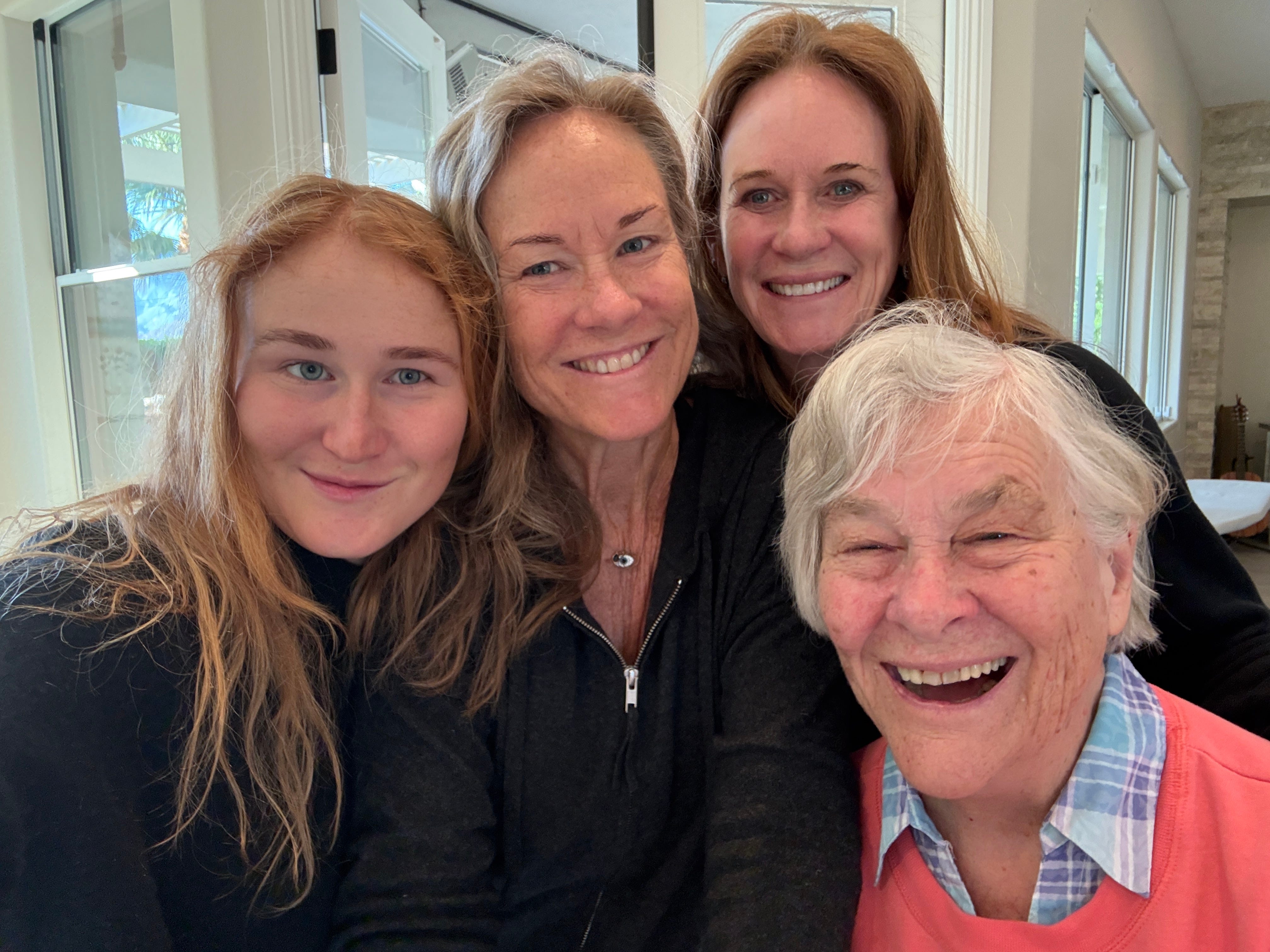
And doing most of it at a distance, through a screen, between everything else on your list.
I’m not describing burnout as a character flaw. I’m describing a structural reality. Midlife women, by demographic and cultural design, absorb an extraordinary amount of relational labor. Being a female caregiver is consistently associated with heavier burden and higher rates of burnout. This isn’t anecdotal. It shows up in the research, across countries and cultures, with striking consistency. Frontiers
What the research also shows, and what most wellness advice completely misses, is that this burden doesn’t just feel bad. It feeds directly into SLGCI, your shared inflammatory root, and lights up nearly every link in your CHAINS map.
The Biology of Giving Too Much
When you are chronically in a state of vigilant caregiving, your stress response doesn’t switch off between demands. Cortisol stays elevated. Sleep becomes fragmented or shallow. The parasympathetic nervous system, the one responsible for rest and recovery, rarely gets a turn.
Research has shown that caregiving burden elevates inflammatory markers including CRP, IL-6, and tumor necrosis factor-alpha, and these elevated levels are associated with cardiovascular disease and all-cause dementia risk. The link is direct. Sustained caregiving stress is not just emotionally depleting. It is biologically costly in ways you carry in your body long after the acute moment has passed. nih
This maps cleanly onto CHAINS. S is activated by chronic stress and cortisol dysregulation. N is the fog you feel when your brain has been running on fumes for months. H is disrupted because hormonal regulation and stress response are biologically intertwined. C is the downstream accumulation of all of it.
You are not imagining how hard this period is. Your biology is reflecting it back to you.
Dispersed and Disconnected
Here is where it gets more complicated.
The people who know you best, your oldest friends, your chosen family, the ones who would notice if you went quiet for too long, are often nowhere near you. Life has scattered everyone. You live in different cities, different countries, different time zones.
You still love each other. But the connection has gaps.
And into those gaps steps social media, presenting itself as the solution.
It isn’t.
Social media is designed for connection but can leave users feeling more alone. Active engagement, whether posting, commenting, or messaging, is associated with increased loneliness rather than reduced isolation. Part of the reason is the environment itself. Every platform that promises to keep you close to your people is also algorithmically tuned to serve you ads targeting your exact vulnerabilities. Perimenopause supplements. Brain fog fixes. Anti-aging protocols. Quick solutions to the slow erosion you’re experiencing. Public Health Post
The scroll that was supposed to help you feel less alone ends up delivering a curated stream of reminders of everything you haven’t managed to fix about yourself.
In-person interactions remain the most effective strategy to address loneliness. Virtual friendships, however warm, have real limitations, and perceived social isolation is positively related to problematic social media use. American Medical Association
The platform designed to connect you is, in many cases, amplifying your CHAINS pathways while monetizing them.
The Connection Problem Is Not a Willpower Problem
This is where most wellness advice gets it completely wrong.
It tells you to reach out more. Schedule a call. Plan a visit. Be more intentional about your relationships.
All of that is true and almost none of it is actionable when you are already running at capacity, coordinating care for a parent in one city, responding to a child navigating a crisis in another, managing a household, running a career, and somewhere in the background, trying to remember to drink enough water.
The connection deficit in midlife is not a motivation problem. It is an infrastructure problem.
You need connection that doesn’t cost you more than you have. You need community that understands your context without requiring you to explain it first. You need people who are carrying the same weight, who will notice your fog, who won’t mistake your quietness for disengagement.
What you don’t need is another platform asking you to perform wellness for strangers.
Why WHOLE Builds Connection Differently
The Connection pillar in WHOLE was designed with this specific reality in mind.
Not social media. Not a forum. Not a comment section.
Intentional, structured community built around shared challenges and goals, where the context is already understood, where the bar for entry is low, and where showing up imperfectly is the whole point.
The buddy system within WHOLE pairs you with someone navigating a similar CHAINS profile. The group challenge architecture creates lightweight shared momentum that doesn’t require you to have energy you don’t have. The platform is designed to reduce the cognitive load of staying connected, not add to it.
Because what the research actually shows is that the quality and context of connection matters far more than the quantity. The sense of being connected to people who matter, even at a distance, is a meaningful buffer against loneliness, when the technology serves the relationship rather than replacing it. nih
That distinction is everything.
A Note on Putting Yourself Last
There’s one more thing worth naming directly.
The same qualities that make midlife women extraordinary caregivers, the attentiveness, the loyalty, the capacity to hold space for others, are the exact qualities that make it easy to defer their own needs indefinitely.
You are good at taking care of people. You have been practicing it for decades. The reflex is so ingrained that it often operates below the level of conscious choice.
But SLGCI doesn’t wait for you to have more time. The inflammatory load accumulates whether or not you’ve decided you’re ready to address it. Your brain doesn’t pause its aging trajectory while you finish caring for everyone else.
Prioritizing your own brain health is not selfish. It is structural. A version of you operating at higher cognitive capacity, lower inflammatory burden, and more genuine connection is a better caregiver, a better partner, a better friend.
This is not a trade-off. It is the intervention.
What’s Next
In the next post, I’ll introduce what WHOLE actually looks like as a daily practice. Not a rigid protocol. Not a perfectionist system. A sustainable, adaptive practice built for the real life of a midlife woman who is already carrying a great deal.
It will look different from anything you’ve tried before. Because it was built from a different premise.
Heidi Forbes Öste, PhD is the founder of 2BalanceU AB and the creator of WHOLE, a brain longevity platform for midlife women grounded in the FINGER trial. She writes at the intersection of behavioral science, healthspan, and digital self-mastery.